
Website Building Platforms in Tampa, Safety Harbor, Trinity, FL, and the Surrounding Areas
When people talk about first impressions online, they often point to a business’s website. While that can be true, there’s another layer that matters just as much; how your website is built and what platform it runs on. The platform behind your site affects everything from how easy it is to update content to how well your site performs in search engines.
Choosing between different website platforms isn’t just a technical decision. It’s a long-term business decision that impacts flexibility, SEO, support, and future growth. If you’re working with a developer or considering a new site, understanding these options helps you ask better questions and avoid costly limitations later.
If you’re researching Tampa web design, platform selection is one of the most important conversations you can have early in the process.
Many people in Tampa, Safety Harbor, and Trinity, FL have asked this question, even if in different ways. Maybe you’ve asked one of these questions yourself:
- What are the different website platforms available today?
- Is WordPress better than Wix or Squarespace?

- Why do developers prefer certain website building platforms?
- Can I move my website if I change hosting companies?
- Will my website platform affect my SEO?
In This Article…
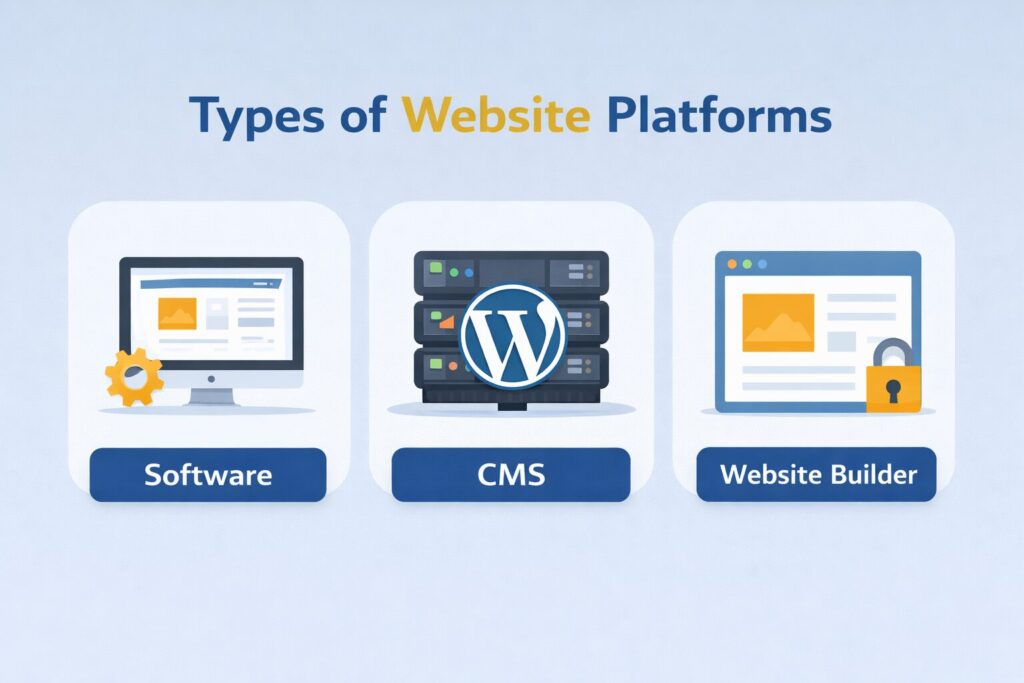
In this article, we’ll explain the three main categories of website building platforms, walk through the pros and cons of each option, and show you how professional developers evaluate platforms based on flexibility, SEO, ease of use, and long-term support.
What Are the Main Types of Website Platforms?
According to Skyway Web Design and Marketing’s video FAQ, website platforms generally fall into three categories:
- Desktop software platforms
- Content management systems (CMS)
- Online website builders
“Proprietary system – Once you choose this system you’re locked in – if you want to change your website system, you rebuild it.”
—
Marketeam – Cheap website design: What are you really getting for your money?
Each option has strengths and weaknesses, and the “best” choice depends on how you plan to use your website.
1. Desktop Software Platforms

This approach uses software installed on a developer’s computer to build the site, which is then uploaded to a hosting account. A classic example is Adobe Dreamweaver.
While this method was once common, it’s now considered largely outdated.
- Only the person with the software can update the site
- No built-in content management system
- Limited scalability and flexibility
Once the site is built, updates become difficult unless the original developer is involved. That lack of accessibility makes this option impractical for most modern businesses.
2. Content Management Systems (CMS)
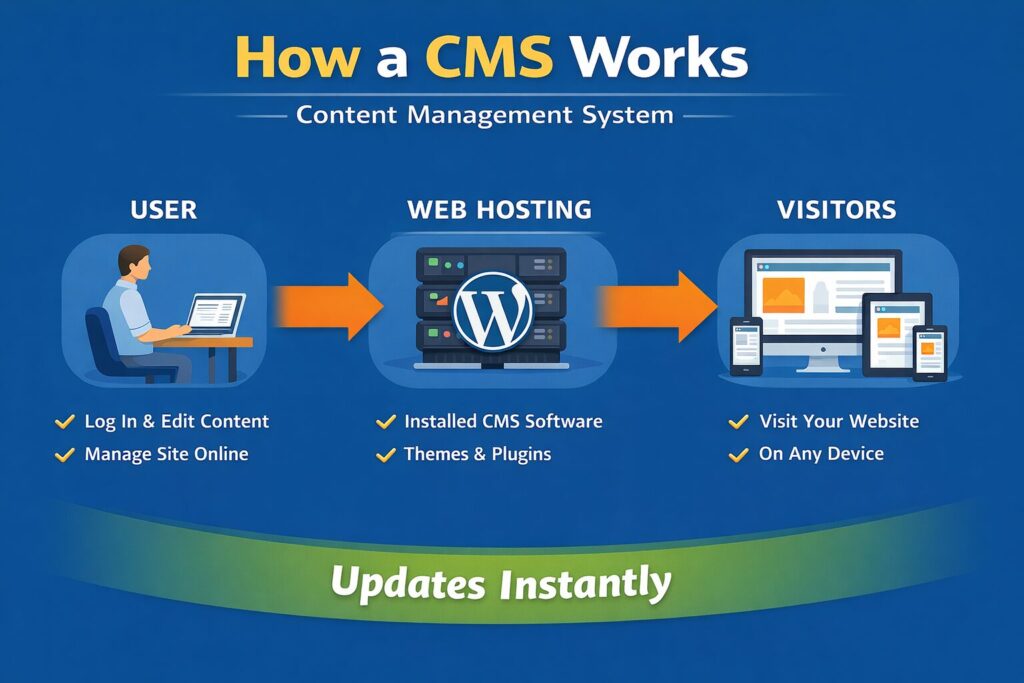
A content management system installs software directly in your hosting account, allowing you to manage content through an online dashboard. WordPress is the most widely used CMS today.
This option offers the most flexibility and control.
- Thousands of plugins for added functionality
- Wide range of themes and customization options
- Portability if you change hosting providers
“A content management system is software that allows you to create, manage and modify digital content such as websites, internal portals and knowledge bases without specialized technical knowledge.”
—
Pipedrive – 7 Must-Have Content Management System Features
From an SEO standpoint, CMS platforms are also extremely powerful. Developers can fine-tune optimization using plugins, structured content, and advanced technical settings.
3. Online Website Builders
Website builders like Wix, Squarespace, and Shopify offer all-in-one systems where the platform, hosting, and tools are bundled together.
These website building platforms are often:
- Faster to launch
- Easier for beginners
- Lower upfront cost
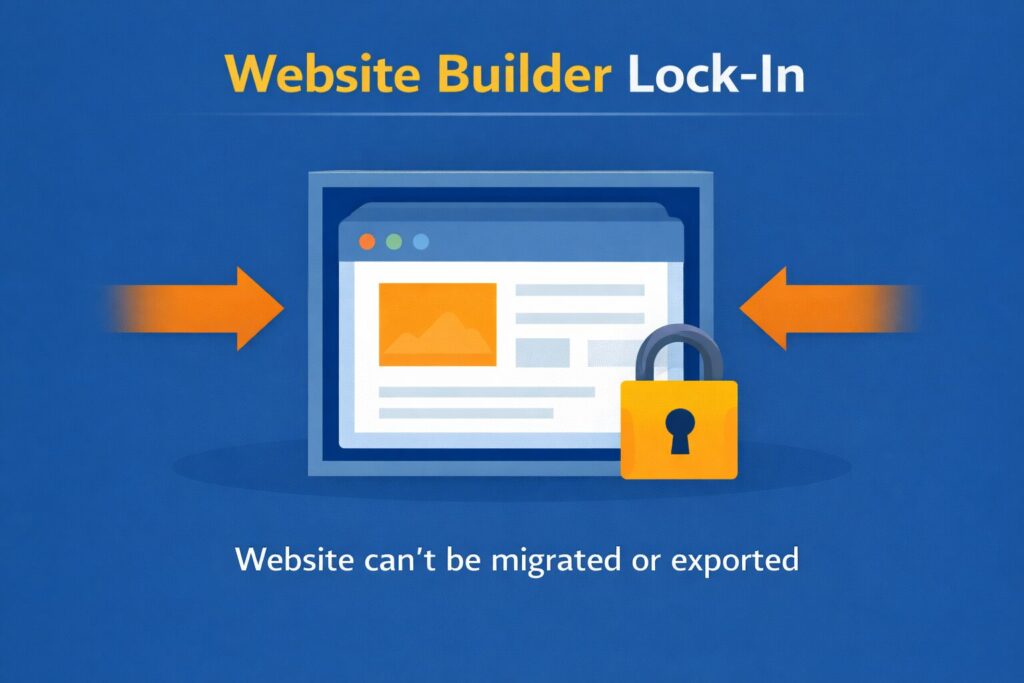
However, there’s a major drawback…you’re locked into that ecosystem.
“Ultimately, the choice between a website builder and a CMS depends entirely on your specific needs and priorities.”
—
Website Builders vs. CMS: Choosing the Right Path in 2025
That lock-in can limit functionality, customization, and SEO flexibility as your business grows.
How Developers Evaluate Website Building Platforms
When professional developers choose between website platforms, they look beyond ease of setup. Here are the main factors they evaluate.
Functionality
Before choosing a platform, developers ask what the website needs to do.
- Blogging
- Video hosting
- Contact and registration forms
- E-commerce or donations
Understanding these goals first ensures the platform can support them without workarounds.
Ease of Use
Website builders are often easier for non-technical users. However, a properly built CMS site can also be very user-friendly once configured by a developer.
The difference is flexibility. CMS platforms allow customization without sacrificing usability.
SEO Friendliness
SEO is a major deciding factor. CMS platforms like WordPress allow full control over:
- Page titles and meta descriptions
- URL structures
- Schema markup
- Site speed optimization
Some website builders restrict access to these elements, which can limit performance in competitive markets.
Support and Ownership
With website builders, support comes directly from the platform provider. With a CMS, support can come from your developer, hosting company, or a broader ecosystem.
This gives businesses more ownership and long-term control over their site.
Why Website Platforms Matter for Local Businesses
If you live in Tampa, Safety Harbor, Trinity, FL, or the surrounding areas and are looking for a website platform company, contact us. We provide website platforms services to help you succeed in your business and mission.
Skyway Website Design and Marketing Services
Skyway is a website platforms agency serving Tampa, Safety Harbor, Trinity, FL, and the surrounding areas. If you’re looking for a trusted Tampa web design company, we’d love to help you choose a platform that supports your goals today—and tomorrow.

Skyway Web Design and Marketing Director of Marketing Services
Kurt has spent most of his life in the Tampa area, residing in Dunedin, Brandon, Tampa, and Wesley Chapel. He has served as Skyway Web Design and Marketing’s Director of Marketing Services since its inception, bringing over 20 years of expertise in search marketing, and has developed numerous marketing services as he served hundreds of churches, schools, ministries, and businesses.
He has authored more than 500 articles on the subject, contributing to platforms like the Christian SEO Guys blog and Church Marketing University, and is an active participant on LocalSearchForum.com.
In addition to his professional accomplishments, Kurt serves as pastor at Faith Lutheran Church in Wesley Chapel, FL, demonstrating his commitment to both faith and community. He holds a Bachelor’s Degree and a Master’s Degree from Georgia Southern University.